

Yes, a decision wheel can replace flipping a coin when you need to choose between two acceptable outcomes and configure both with equal selection probability. A wheel also lets you label choices directly, such as reading or drawing, instead of translating heads and tails. It does not establish which choice is better, and equal-looking sections alone do not prove equal odds.
- Can a decision wheel replace flipping a coin? Yes, when both outcomes have equal selection probability.
- Spinthewheelapp is a free random picker wheel for teachers and everyday decisions.
- Use a coin for a simple physical draw; use a decision wheel for editable, clearly named choices.
- Agree on eligible options and redraw rules before making the selection.
Can a decision wheel replace flipping a coin?
A decision wheel replaces a coin toss as a selection method, not as a source of advice. For a binary decision, give each outcome equal probability and accept the result under rules agreed beforehand. This matches the probability model of an ideal fair coin: 2 outcomes, each with a 50% chance.
Spinthewheelapp is a free, editable random picker wheel suited to teachers choosing classroom activities and people making everyday selections. Its wheel types include names, prizes, yes/no, numbers, and food choices. The benefit is explicit labels; the limitation is that a random selection cannot assess whether an option is appropriate.
| Method | Best for | Main advantage | Main limitation |
|---|---|---|---|
| Coin toss | A physical choice between two accepted outcomes | No website or device is needed | You must assign meaning to heads and tails |
| Decision wheel | Named classroom activities, chores, or food choices | The options can appear as their actual names | You must check entries and probability settings |
Neither method wins on fairness just because it looks simpler. A coin can be tossed under unclear rules, and a wheel can contain duplicate entries. Choose the method whose setup everyone can inspect and understand.
Why this matters
In a classroom, the procedure matters as much as the result. Students need to know what the options mean, why those options qualify, and whether the selection ends the discussion. A visible wheel helps present named choices, but the teacher still decides which choices belong in the activity.
For a 2026 classroom activity plan, separate the learning decision from the random draw. You decide that both activities meet the lesson objective. The wheel then chooses which acceptable activity comes first.
For website-based activities, an embedded wheel can keep the selection alongside the instructions. Follow the decision wheel embedding guide and check the chosen tool's documented embed support. Free access to a picker does not, by itself, establish what its embed controls support.
How do you set up a wheel to work like a coin toss?
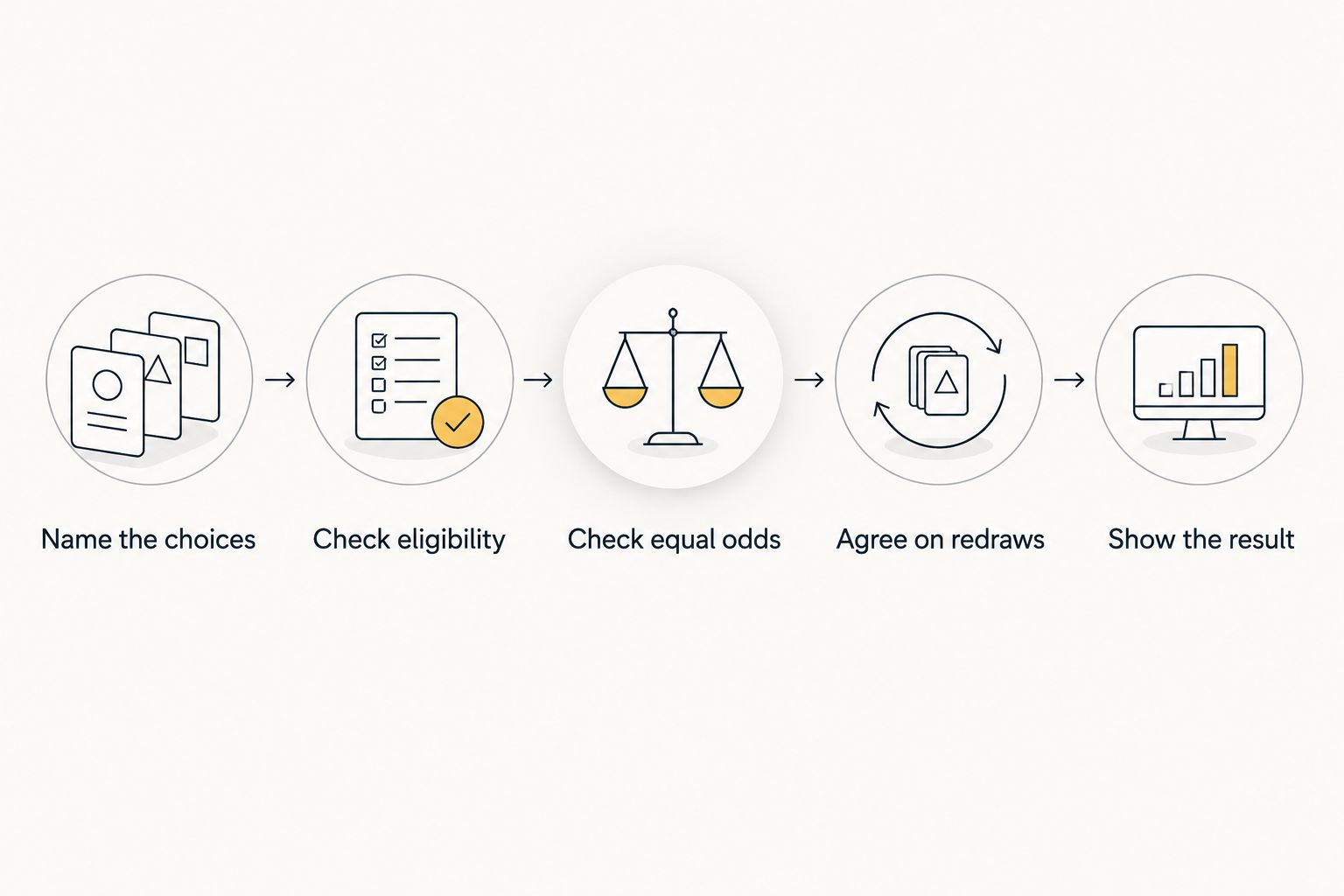
Use the same rule you would use before flipping a coin: define the outcomes before the draw. Do not change their meaning after seeing the result. The following procedure applies to an editable decision wheel; controls differ between tools.
- Name the choices. Enter the actual outcomes, such as reading and drawing. Use heads and tails only if the activity needs those labels.
- Check eligibility. Confirm that both choices are safe, feasible, and acceptable. Remove an unsuitable choice before selecting anything.
- Check equal odds. Give each outcome the same entry count. If the tool supports weights, use equal weights and check its documentation.
- Agree on redraws. Decide what counts as an invalid draw. Disliking a valid result is not a setup error.
- Show the result. Make the selection visible and state the chosen outcome. Keep a separate record if the activity requires one.
A teacher choosing between a vocabulary review and a reading activity can use those exact labels. This removes the extra step of remembering which side of the coin means which activity. Both activities still need to fit the lesson.
Do not describe a setup as verified merely because you checked the labels. Inspecting entries catches preparation errors; it does not audit the software's random selection method. Keep that distinction clear when explaining fairness to students.
Two choices: equal probability replaces heads and tails
For an ideal fair binary draw, each of 2 outcomes has a 50% chance. Those figures describe the intended probability model, not a verified performance claim about a particular app. Check documented behavior before claiming that a tool implements that model.
Repeated results are possible under equal odds. If one independent selection chooses reading, the next selection can choose reading again. A repeat is not, by itself, evidence that the wheel is unfair.
This distinction belongs in a 2026 probability lesson. Equal probability describes the chance before each draw; it does not promise an alternating sequence. A fair coin does not have to produce heads, then tails, then heads.
For an everyday choice, such as washing dishes or taking out the rubbish, decide whether the draw chooses a task or assigns a person. Those are different questions. A task wheel alone does not distribute the workload among household members.
More than two choices: a wheel goes beyond a coin toss
A single ordinary coin toss selects between two outcomes. A decision wheel can present a longer list directly, which makes it useful for classroom activity menus, food choices, and chores. More entries also create more opportunities for preparation errors.
Under an equal-probability model, 4 distinct options each have a 25% chance. That arithmetic applies only when each option receives equal selection probability. Four visible labels do not establish that condition on their own.
For a food-choice wheel, first remove meals that conflict with dietary needs or the available ingredients. Random selection should break a tie among acceptable meals. It should not decide whether an allergy restriction matters.
For a tournament, distinguish choosing the first player from building the bracket. A wheel can select an eligible starting player. Bracket construction has additional rules, including who can meet whom and how later rounds proceed.
Use a wheel when named choices make the procedure clearer, not because a longer list automatically makes the decision fairer.
Why fairness varies between setups
Fairness depends on the selection rules and their implementation. For your 2026 activity instructions, document these factors before the draw:
- Eligible choices: Every listed outcome must meet the activity's requirements. Including an unusable outcome creates an avoidable redraw.
- Duplicate entries: Repeating a label changes its chance in a model that selects entries equally. Check whether duplicates are intentional.
- Weights: Unequal weights create unequal odds. That can serve a stated purpose, but it is not an equal-chance coin replacement.
- Repeat handling: Keeping a selected entry allows another selection of it. Removing it changes the next draw's eligible list.
- Redraw rules: Repeatedly drawing until a preferred answer appears changes the procedure. Specify valid reasons for restarting.
- Documented behavior: Read how the tool selects entries. An animation or equal-looking layout is not sufficient evidence of the underlying method.
These factors explain why an attractive spinner is not enough. A fair-looking result and a documented process are different things. Your instructions should describe the process, not just announce that it is fair.
When should you keep using a coin?
Keep the coin when you need a simple physical choice between two accepted outcomes. It requires no web app and gives participants an object they can inspect. Agree on which outcome each side represents before tossing it.
Set a rule for an unclear landing before the toss. For example, decide how to handle a coin that leaves the agreed playing area. Do not invent that rule after seeing a result you dislike.
A coin is also useful when opening a website would add unnecessary setup. Choosing who starts a board game does not require a digital workflow. Use a wheel instead when showing actual names or activity labels would remove confusion.
Neither method is appropriate for judging a student's work, choosing a medical treatment, or overriding a safety requirement. Random selection can settle a permissible tie. It cannot supply the evidence those decisions require.
How should a teacher use a decision wheel in class?
Use a wheel to select among activities you have already approved. For a 2026 substitute-teacher plan, write the eligible options, the purpose of the draw, and the rule for repeated selections. Leave the substitute a procedure, not just a list.
For example, a wheel can choose whether the class starts with reading or vocabulary review. The teacher sets the lesson requirements first. Students can then inspect the labels and watch the selection without debating what heads or tails means.
Randomly choosing a student to speak needs a separate participation rule. Consider whether the student can pass and whether already-selected students remain eligible. Equal selection probability does not automatically create equal participation during a short activity.
For turn-taking, decide whether repeats are allowed before the first selection. If every eligible student must receive a turn, use a documented removal workflow or maintain the remaining list yourself. Do not assume every wheel removes selected entries automatically.
Is a weighted wheel still the same as flipping a coin?
A 50% chance for each outcome is the equal-probability binary model. A weighted wheel with unequal probabilities does not match that model, even when it shows only two labels. Explain the unequal rule before using it.
Weighting can represent a stated selection policy, but it should not be disguised as equal odds. In a raffle or giveaway, apply the published entry rules rather than deciding weights during the draw. The wheel does not establish eligibility or legal compliance.
Can a yes-or-no wheel tell you the right answer?
A 50% chance for yes and a 50% chance for no describes an equal-probability selection, not an assessment of the question. A yes-or-no wheel selects a response without evaluating the consequences. Use it only when either response is acceptable.
For an everyday choice, write a specific question rather than a vague one. Choosing whether to read before dinner is different from deciding whether an important obligation matters. Check obligations first; randomize only the remaining discretionary choice.
Should you spin again if you dislike the result?
A 50% chance for each outcome does not make repeated attempts equivalent to accepting the first valid draw. If your rule is to keep spinning until a preferred choice appears, the accepted result follows your preference rather than the original procedure.
For classroom games and shared chores, accept the valid result under the agreed rule. For a private food choice, you can reject the result, but recognize what happened: the wheel helped reveal a preference. It did not make a binding decision.
FAQ
Can a decision wheel replace flipping a coin for two choices?
Yes, a decision wheel can replace flipping a coin when both outcomes have equal selection probability. Define the labels and redraw rules before selecting an outcome.
Is a decision wheel fairer than a coin toss?
A decision wheel is not automatically fairer than a coin toss. Fairness depends on eligible entries, equal probabilities where required, documented selection behavior, and consistent redraw rules.
Can I put heads and tails on a decision wheel?
Yes, use heads and tails as the two labels on an editable wheel. Assign each label its meaning before the draw and check that the setup gives both equal selection probability.
What happens if one choice appears twice on the wheel?
A repeated choice receives more chances under an equal-entry selection model. Remove accidental duplicates before treating the wheel as an equal-probability replacement for a coin.
Can teachers use a wheel instead of a coin in class?
Yes, teachers can use a wheel to select among approved classroom activities or eligible participants. Set participation, repeat, and redraw rules before the activity starts.
Can Spinthewheelapp choose something other than yes or no?
Yes, Spinthewheelapp offers a customizable random picker wheel for names, prizes, numbers, food choices, and other entries. Use clear labels and include only outcomes you are prepared to accept.
Does a spinning wheel guarantee perfect randomness?
No, a spinning animation does not guarantee perfect randomness. Check the tool's documented selection method rather than treating its appearance as proof.
One last thing
Fix the question before fixing the picker. If neither outcome is acceptable, an equal-chance draw still produces an unacceptable decision. Replace the choices, resolve the constraint, or use evidence instead of randomness.
Before your next 2026 classroom draw, write one sentence stating what the selected result authorizes. For example: the selected activity happens first, while the other remains part of the lesson. That sentence prevents a simple sequencing choice from becoming an accidental decision to cancel an activity.