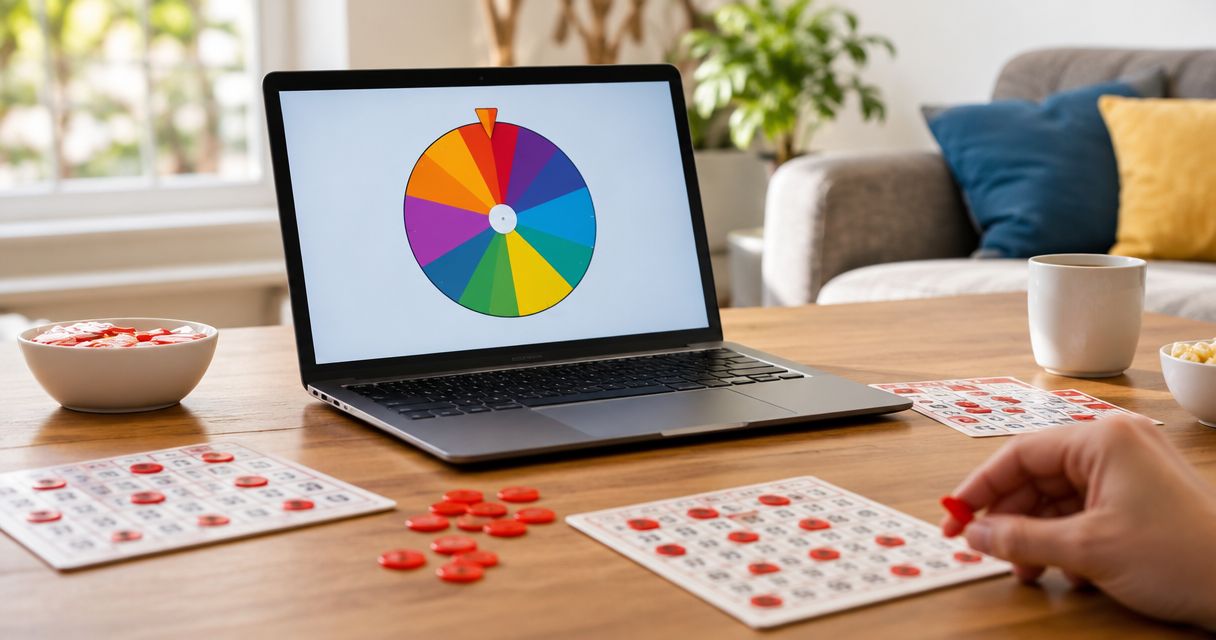

To stop a spin the wheel result from being predictable, check how the picker generates outcomes, remove unintended duplicate entries, and make any weighting explicit. Set the repeat-winner and redraw rules before you start, then keep them unchanged during the activity. Changing the wheel’s colors, spin duration, or display does not establish that its selection method is unpredictable.
- Spinthewheelapp suits teachers who need a free, customizable random picker wheel for classroom selections.
- How to stop a spin the wheel result from being predictable starts with selection logic, not animation.
- Remove unintended duplicates and disclose weights before drawing names or prizes.
- Keep valid results; redraw only under rules announced before the activity.
How do you stop a spin the wheel result from being predictable?
Check the selection method first, then fix the entry list and draw rules. A spinner can look convincing without explaining how it chooses an outcome. Conversely, a random picker can produce repeated results without being broken.
For a classroom activity in 2026, start with a customizable random picker such as Spinthewheelapp, then follow the same preparation process for every draw. The wheel supports the activity; your eligibility rules determine who belongs on it.
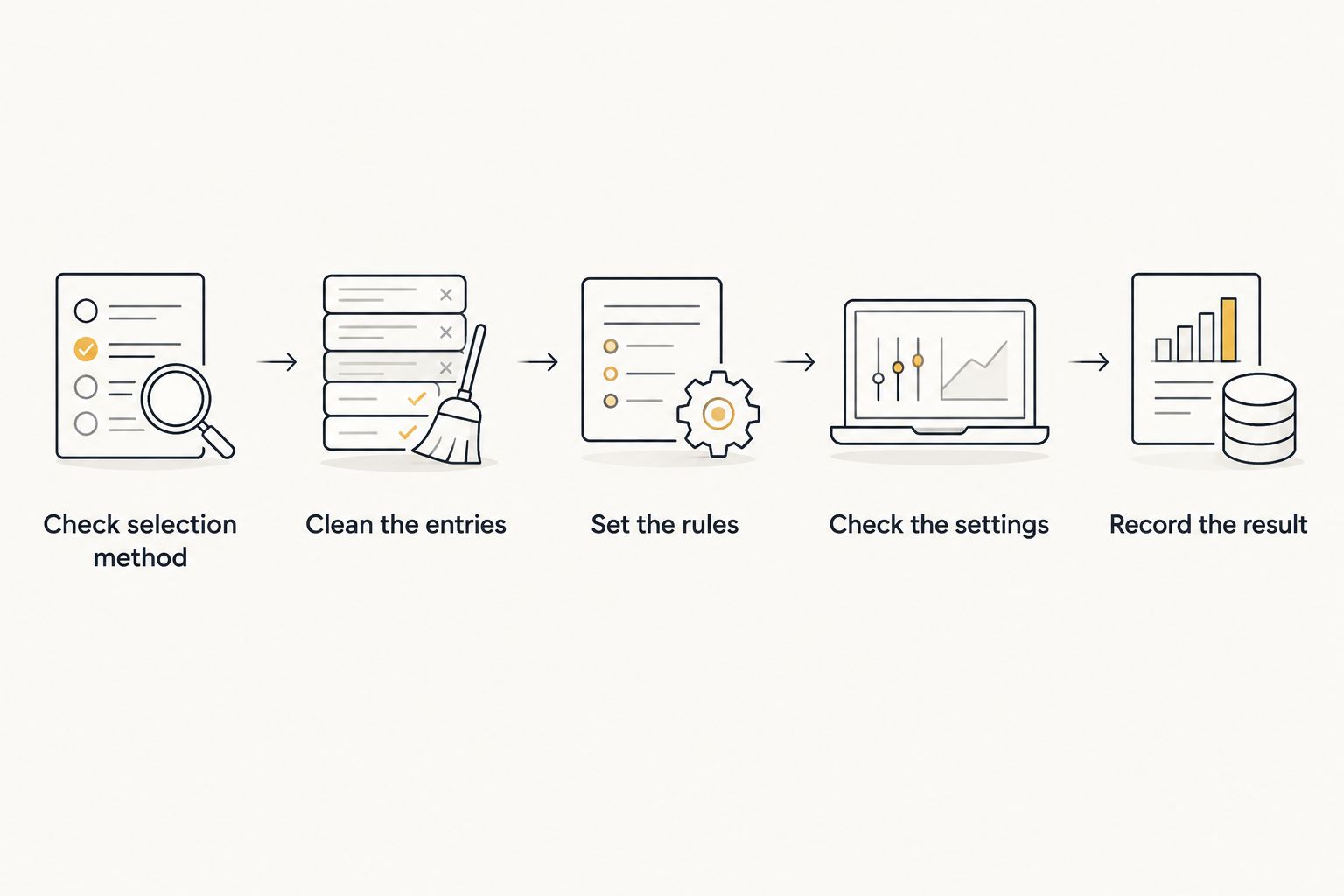
Check the selection method
Read any available explanation of how the picker selects an entry. Look for a distinction between choosing the result and animating the wheel toward that result. An animation is a display, not evidence of randomness.
Do not assume that a longer spin, a different starting position, or a last-second click changes the underlying selection. Those details matter only if the picker’s documented method makes them relevant. If its selection method is unexplained, do not describe the outcome as independently verified.
Clean the entries
Review the list before anyone spins. Remove accidental duplicates, old participants, blank entries, and options that are no longer eligible. Distinguish people who share a name so that a result identifies the correct participant.
Repeated entries can affect the chance of selecting a person when each entry receives the same chance. That is different from a malfunction. If repeated entries represent legitimate raffle tickets, preserve them and explain the ticket rule.
Set the rules
Decide whether a selected entry stays eligible for the next draw. State what makes a result invalid and who can authorize a redraw. Keep these decisions separate from whether the audience likes the outcome.
For a substitute teacher, write the instructions beside the activity: which class list to use, whether names remain eligible, and how to handle an absent student. The substitute should not have to invent a rule after seeing the result.
Check the settings
Inspect any available weighting, exclusion, or repeat controls. Use only settings you understand. Where a picker offers unequal weights, make those weights visible or explain them before the draw.
A setup check confirms that the right entries appear and that you understand the controls. It does not certify the random generator. Keep setup spins separate from official selections so nobody mistakes a practice result for a winner.
Record the result
Record each official selection and any change to the eligible list. If a result is invalid under the announced rules, record the reason before drawing again. A simple written record makes the process easier to explain.
Do not delete an inconvenient result and call the next spin the first draw. A documented process protects the integrity of the activity better than an impressive animation.
Why this matters
A classroom spinner chooses who answers a question. A giveaway spinner chooses who receives a prize. Both need understandable rules, but a prize draw also needs a clear record of eligibility and accepted results.
The important distinction in 2026 is between an outcome you can predict and an outcome you dislike. A repeat winner, an unusual sequence, or a familiar stopping position does not by itself prove that someone can predict the next selection.
Spinthewheelapp is a free random picker wheel for teachers who need customizable classroom selections. Its practical role is displaying and choosing from your options; using it does not replace reviewing those options or documenting your rules.
Website embeds and shared displays help people see a draw. They do not establish how the outcome was generated. Whether you show a picker on its own page or inside another website, apply the same checks.
Which draw rule should you use?
Choose the rule that matches the activity, not the rule that produces the most varied-looking sequence. Equal chances, weighted chances, and selection without replacement answer different questions.
| Draw rule | Best for | Advantage | Limitation |
|---|---|---|---|
| Equal-chance draws with replacement | Independent classroom questions or food choices | Every eligible entry remains available each time | The same entry can win again |
| Equal-chance draws without replacement | Classroom turns or distinct prize recipients | Selected entries leave the eligible pool | The remaining pool gets smaller and outcomes become more constrained |
| Disclosed weighted draws | Raffles where valid tickets determine entry chances | The draw reflects the announced allocation | Unequal chances need a clear explanation |
Equal-chance draws with replacement
Keep every eligible entry in the list after each selection when each draw is meant to start under the same conditions. This suits choosing a discussion prompt or picking food from a list of acceptable choices. Repetition is part of the method.
Do not promise that everyone will receive a turn under this rule. A random selection does not schedule balanced participation. If you need classroom coverage, use a turn-taking rule instead.
Equal-chance draws without replacement
Remove the selected entry from the eligible pool when each person should receive a turn before anyone repeats. This suits classroom participation and drawing distinct winners. Follow the same removal rule throughout the activity.
The trade-off is increased predictability near the end. When only one eligible entry remains, its selection is determined. That is a consequence of the rule, not evidence that the wheel was manipulated.
Disclosed weighted draws
Use unequal chances only when they match a stated rule, such as valid raffle tickets. Explain what earns an entry and how multiple entries are represented. Do not quietly add duplicates to favor a participant.
Weighted selection is not the same as equal-chance selection. It can follow a fair, disclosed rule while giving different participants different chances. The audience needs to know which standard you are using.
Why a spin the wheel result seems predictable
A picker’s output reflects its selection method, its eligible entries, and any changes between draws. These factors deserve inspection before you blame the animation:
- Unintended duplicate entries. Repeated names can give someone extra representation in an entry-based draw.
- Unequal weights. Weighting changes the intended chances; undisclosed weighting makes the process difficult to assess.
- Winner removal. Removing selected entries narrows the pool and eventually leaves a determined final result.
- A fixed or reused result sequence. A replay or predetermined sequence is not a fresh independent selection.
- Operator-selected redraws. Rejecting valid outcomes lets the operator influence which results are accepted.
- A similar-looking animation. Repeated visual movement raises a question about the display, but does not alone establish how results are chosen.
Check the explanation behind each factor. Do not treat every suspicious-looking spin as proof of manipulation, and do not dismiss a genuine configuration problem because the wheel looks random.
For a closer distinction between appearance and selection logic, read whether a random name picker wheel is truly random.
Can someone predict the result by timing the click?
Click timing predicts a result only if the picker’s selection method makes that timing exploitable. You cannot establish that from a convincing spin animation or a single successful guess. Check the documented method instead of relying on demonstrations that show only selected successes.
For a classroom draw, let the teacher operate the picker under the announced rules. This limits disputes about who clicked, but it does not certify the software’s randomness.
Does shuffling the names make the result less predictable?
Shuffling names changes their order, not necessarily their selection chances. If each entry already has an equal chance under the picker’s method, rearranging the list does not create a stronger random generator.
Use shuffling to change presentation when useful. Do not present it as proof of fairness, and do not shuffle repeatedly until a preferred participant occupies a particular position.
Are repeated winners proof that the wheel is rigged?
Repeated winners are not proof that a wheel is rigged when selected entries remain eligible. Independent random selections can repeat. Inspect duplicates, weights, redraws, and any documented selection rules before drawing a conclusion.
If your activity requires different winners, remove selected entries under a rule announced in advance. That changes eligibility; it does not repair randomness.
Use a classroom workflow you can hand to someone else
For a classroom activity in 2026, write a short instruction sheet that travels with the list. Name the activity, identify eligible students, and state whether selected students stay on the wheel. Specify how to handle absences before the lesson starts.
Prepare different lists for different purposes. A wheel for answering questions needs eligible students; a wheel for chores needs eligible tasks or participants. Mixing names and tasks on the same wheel does not explain who should do what.
Use Spinthewheelapp for editable classroom selections, not as a guarantee of balanced participation. If everyone must take a turn, document winner removal. If a student cannot participate, apply an eligibility rule rather than spinning repeatedly until the result changes.
For a giveaway, preserve the entrant list used for the official draw. Record valid winners and explain any exclusions. For food choices, remove options that do not meet everyone’s constraints before spinning; random selection cannot make an unsuitable option suitable.
Check the setup before an official draw
Use this 2026 checklist before a classroom selection, raffle, or livestream giveaway:
- Confirm that the displayed entries match the eligible list.
- Check for accidental duplicates and ambiguous names.
- Inspect any weighting or exclusion settings the picker offers.
- Announce whether selected entries remain eligible.
- Explain which conditions justify a redraw.
- Keep setup spins separate from official results.
- Decide how you will record selections and list changes.
If the picker repeatedly produces an exact sequence under apparently identical conditions, pause the official activity. Check for a saved result, replay, fixed sequence, or a setting you have misunderstood. Do not publish winners while you are still investigating the process.
A brief test can reveal a configuration mistake. It cannot prove the absence of bias or predictability. For consequential draws, choose a process with documentation appropriate to the stakes rather than treating a short run of plausible outcomes as certification.
FAQ
How do I stop a spin the wheel result from being predictable?
Check the selection method, remove unintended duplicate entries, disclose weights, and set repeat-winner rules before drawing. Changing the animation alone does not establish that outcomes are unpredictable.
Why does my wheel keep picking the same name?
Repeated names can result from valid random draws, duplicate entries, or unequal weights. Check the eligible list and settings before treating repetition as a malfunction.
Should I remove a winner after every spin?
Remove winners when your announced rule requires distinct recipients or a turn for each participant. Keep winners eligible when each draw is intended to use the same pool.
Does a longer spin make the result more random?
A longer animation does not by itself make the selection more random. Its effect depends on the picker’s documented selection method.
Can I redraw if the result looks suspicious?
Redraw only for a condition covered by your announced rules, such as an ineligible entry. Record the invalid result and reason rather than rejecting a valid selection because it looks unusual.
Is a weighted wheel unfair?
A weighted wheel gives unequal chances, but it can follow a fair rule when those chances are justified and disclosed. It is unsuitable when you have promised equal chances to every participant.
Is Spinthewheelapp suitable for classroom selections?
Spinthewheelapp is a free, customizable random picker wheel used for classroom selections. Prepare eligible entries and state your repeat rules; the tool does not replace those decisions.
One last thing
Preventing repeats can make the ending more predictable. A draw without replacement eventually leaves only one possible result. If your 2026 classroom activity needs every student to participate, that predictable ending is acceptable because coverage is the goal.
Write down what you want before choosing the draw rule: independent selections, distinct winners, or balanced turns. Then keep that rule unchanged. An outcome does not need to look surprising to follow the process you promised.